Combining top-end desktop and notebook components, the MALIBAL Nine X7200 is the workstation you can take with you. Today we see how it compares to our fastest “desktop replacement” notebook, and how well it stands up to a similarly-configured desktop PC.
The fact that Intel's Core i7 adds an incredible level of performance to semi-portable notebooks won’t come as news to most people, with examples like the i7-720QM-powered G51J and i7-820QM-powered W860CU arriving a year ago. Yet, when Intel’s fastest mobile processor couldn’t match the performance level of its earliest desktop CPU, many enthusiasts were left to wonder, “is that it?”
Not quite.
Going back even farther, we saw Clevo making notebooks for the Core i7 architecture even before Intel was ready to announce its mobile version. These desktop-based machines certainly wouldn’t thrill the ultra-mobile crowd, yet “mobile workstation” performance makes no apologies for heft. That tradition follows through in Clevo’s latest power monster, its X7200, supporting Intel’s high-flying six-core Core i7-980X Extreme and up to two of the fastest-available mobile graphics modules.

If you want one, you’re going to have to buy it from somewhere, and white-box builder MALIBAL wants to be your source. It sent a fully-configured ultimate-performance configuration for Tom’s Hardware to look over, complete with SLI graphics and a RAID 0 configuration of two SSD drives.
Not a configuration for lightweights, this 17-pound (with adapter) behemoth “weighs in” at over $5000, yet even the least-expensive $2600 version carries MALIBAL’s three-year extended-service warranty. Far more portable than any desktop PC competitor, enthusiasts with extra heft in both their arms and wallets will definitely want to take a closer look at its performance.
The fact that Intel's Core i7 adds an incredible level of performance to semi-portable notebooks won’t come as news to most people, with examples like the i7-720QM-powered G51J and i7-820QM-powered W860CU arriving a year ago. Yet, when Intel’s fastest mobile processor couldn’t match the performance level of its earliest desktop CPU, many enthusiasts were left to wonder, “is that it?”
Not quite.
Going back even farther, we saw Clevo making notebooks for the Core i7 architecture even before Intel was ready to announce its mobile version. These desktop-based machines certainly wouldn’t thrill the ultra-mobile crowd, yet “mobile workstation” performance makes no apologies for heft. That tradition follows through in Clevo’s latest power monster, its X7200, supporting Intel’s high-flying six-core Core i7-980X Extreme and up to two of the fastest-available mobile graphics modules.
If you want one, you’re going to have to buy it from somewhere, and white-box builder MALIBAL wants to be your source. It sent a fully-configured ultimate-performance configuration for Tom’s Hardware to look over, complete with SLI graphics and a RAID 0 configuration of two SSD drives.
| MALIBAL Nine X7200 Component List | |
|---|---|
| Platform | Intel LGA 1366, X58 Express / ICH10R, MXM-III Discrete Graphics |
| CPU | Intel Core i7-980X Extreme Six-Core, 3.33-3.60 GHz, 6.4 GT/s QPI, 12 MB L3 Cache, 32 nm, 130 W |
| RAM | Samsung 12 GB (3 x 4 GB) DDR3-1333 MT/s SODIMM, CL9, 1.5 V, Non-ECC |
| Graphics | Dual Nvidia GeForce GTX 480M, 2 GB GDDR5, SLI |
| Display | 17.3" Glossy LED Backlit TFT, 1920x1080 |
| Webcam | 3.0 Megapixel |
| Audio | Integrated HD Audio |
| Security | Built-in Fingerprint Reader |
| Storage | |
| Hard Drive | 2 x Intel X25-M 80 GB SSD, Striped: MLC, SATA 3Gb/s |
| Optical Drive | Matshita BD-MLT UJ240AS 6x Blu-ray Reader / 8x DVD Writer Combo Drive |
| Media Drive | 9-in-1 Flash Media Interface |
| Networking | |
| Wireless LAN | Intel Ultimate-N 6300, IEEE 802.11a/b/g/n, 11/54/450 Mb/s |
| Wireless PAN | Optional (not installed) |
| Gigabit Network | JMicron PCIe 10/100/1000 Mb/s Ethernet |
| IEEE-1394 | Optional (not installed) |
| Telephony | Not Available |
| Peripheral Interfaces | |
| USB | 3 x USB 2.0, 2 x USB 3.0 |
| Expansion Card | Not Available |
| HDD | 1 x eSATA 3Gb/s |
| Audio | Headphone, Microphone, Line-In, Digital Out Jacks |
| Video | 1 x Dual-Link DVI-I w/VGA Adapter, 1 x HDMI |
| Power & Weight | |
| AC Adapter | 300 W Power Brick, 100-240 V AC to 15 V DC |
| Battery | 14.8 V 5300 mAh (78.44 Wh) Single |
| Weight | Notebook 13.4 lbs, AC Adapter 3.6 lbs, Total 17.0 pounds |
| Software | |
| Operating System | Microsoft Windows 7 Professional 64-bit Edition, OEM |
| Service | |
| Warranty | 3-year labor, 1-year parts |
| Price | $5325 |
Not a configuration for lightweights, this 17-pound (with adapter) behemoth “weighs in” at over $5000, yet even the least-expensive $2600 version carries MALIBAL’s three-year extended-service warranty. Far more portable than any desktop PC competitor, enthusiasts with extra heft in both their arms and wallets will definitely want to take a closer look at its performance.
One might have expected a machine with such powerful hardware to require an oversized chassis and wider screen, but Clevo managed to pack everything into a 17.3” form factor. Flogged as “THD” (for True HD)--as if that were an improvement over the older 1920x1200 resolution--LED-backlighting is the true advancement of its 1920x1080 panel.

 Zoom
Zoom
The base includes a fingerprint scanner to allow biometric login, while the raised-bezel top adds a three-megapixel camera.
 Zoom
Zoom
Audio jacks, a trio of USB 2.0 ports, and a Kensington Lock hole occupy the right side of the X7200 chassis.
 Zoom
Zoom
The real business happens on the left, where a DVI-I, RJ45 network, HDMI-out, two USB 3.0, and eSATA 3Gb/s ports are found. The antenna jack supports an optional tuner card, while the IEEE-1394 jack supports an optional FireWire module, not included in this installation.
 Zoom
Zoom
MALIBAL also didn’t add the HDMI-in feature, which adds video pass-through for the 1080p panel, but the 9-in-1 memory card interface is standard. Below those, a 6x Blu-ray Disk reader, 8x DVD writer combo drive addresses most optical media needs.
 Zoom
Zoom
 Zoom
Zoom
The X7200 front panel is fairly clean, having only vents and indicator lights, while the back panel centers a power connection between its exhaust grilles.

Standard for the X7200 is the carrying bag, a power brick, an owner’s manual, and a cleaning cloth. MALIBAL adds the software, depending on hardware configuration, and left-over thermal compound from its $40 IC Diamond 7 installation option.
We included the fastest of our previously-tested notebooks in today’s comparison, though it’s really not a fair fight when the X7200 uses a desktop CPU.
In order to make this a fair fight, a desktop platform had to be added to the mix. Gigabyte’s X58A-UD3R was chosen for its comparable quality and features, and we even used MALIBAL’s hard drives and CPU to test it. Manually selecting a 133.0 MHz base clock disabled Gigabyte’s auto-overclock method while simultaneously underclocking that frequency by 1/3 of 1 MHz compared to reference specification.

Here’s where things get a little strange: we didn’t have three matching 4 GB modules on hand, so we used three unmatched DDR3-1600 modules from a previous roundup to match MALIBAL’s DDR3-1333 CAS 9-9-9-24 configuration. Identical internal organization between all three modules made triple-channel mode possible in spite of the differing brands.
Yet, that’s not where the oddness ends. Nvidia’s GeForce GTX 480M graphics processor is nothing other than a 2 GB version of its GeForce GTX 465, underclocked so excessively that no high-end desktop part is slow enough to compete. Since the responsibility for this performance-to-naming disparity rests purely on Nvidia, we didn’t want to punish MALIBAL or its supplier Clevo by comparing it to a vastly-superior GeForce GTX 480 desktop card. Instead, we chose the GeForce GTS 450 for the desktop’s SLI configuration. MSI and ECS’ GTS 450 cards were paired because of their identical clock speeds.
We’re sure that some readers will view this mishmash of components as an intentional crippling of the desktop platform, but we’re equally sure that our benchmark set will prove the validity of these choices.
ZoomThe base includes a fingerprint scanner to allow biometric login, while the raised-bezel top adds a three-megapixel camera.
ZoomAudio jacks, a trio of USB 2.0 ports, and a Kensington Lock hole occupy the right side of the X7200 chassis.
ZoomThe real business happens on the left, where a DVI-I, RJ45 network, HDMI-out, two USB 3.0, and eSATA 3Gb/s ports are found. The antenna jack supports an optional tuner card, while the IEEE-1394 jack supports an optional FireWire module, not included in this installation.
ZoomMALIBAL also didn’t add the HDMI-in feature, which adds video pass-through for the 1080p panel, but the 9-in-1 memory card interface is standard. Below those, a 6x Blu-ray Disk reader, 8x DVD writer combo drive addresses most optical media needs.
ZoomZoomThe X7200 front panel is fairly clean, having only vents and indicator lights, while the back panel centers a power connection between its exhaust grilles.
Standard for the X7200 is the carrying bag, a power brick, an owner’s manual, and a cleaning cloth. MALIBAL adds the software, depending on hardware configuration, and left-over thermal compound from its $40 IC Diamond 7 installation option.
We included the fastest of our previously-tested notebooks in today’s comparison, though it’s really not a fair fight when the X7200 uses a desktop CPU.
| Test System Configuration | |
|---|---|
| MALIBAL Nine X7200 CPU | Intel Core i7-980X Extreme LGA 1366, 3.33-3.60 GHz, 12 MB L3 Cache |
| MALIBAL Nine X7200 RAM | 3 x Samsung M471B5273CH0-CH9 (3 x 4 GB) DDR3-1333 CAS 9-9-9-24, 12 GB Total |
| MALIBAL Nine X7200 Graphics | Nvidia GeForce GTX 480M 2 GB 425 MHz GPU Core, GDDR5-2400, Mobile Driver Version 259.51 |
| MALIBAL Nine X7200 Hard Drive | 2 x Intel X25-M 80GB SSD, 160 GB (Striped), SATA 3Gb/s |
| Alienware M17x CPU | Intel Core i7-920XM PGA988, 2.00-3.20 GHz, 8 MB L3 Cache |
| Alienware M17x RAM | 2 x Kingston KHX1333C7S3K2/4G (2 x 2 GB) DDR3-1333 CAS 9-9-9-24, 4 GB Total |
| Alienware M17x Graphics | 2 x AMD Mobility Radeon HD 5870 1 GB, CrossFire 700 MHz GPU, GDDR5-4000, Mobile Driver Version 8..692.2-100203a1-095371C-Dell |
| Alienware M17x Hard Drive | Corsair CSSD-V128GB2-BRKT SSD, 128 GB, SATA 3Gb/s |
| AVADirect W880CU CPU | Intel Core i7-820QM PGA998, 1.73-3.06 GHz, 8 MB L3 Cache |
| AVADirect W880CU RAM | 2 x Kingston KVR1333D3S9/2G (2 x 2 GB) DDR3-1333 CAS 9-9-9-24. 4.0 GB Total |
| AVADirect W880CU Graphics | Nvidia GeForce GTX 480M 2 GB 425 MHz GPU Core, GDDR5-2400, Mobile Driver Version 258.68 |
| AVADirect W880CU Hard Drive | Corsair CSSD-V128GB2-BRKT SSD, 128 GB, SATA 3Gb/s |
| Sound | Integrated HD Audio |
| Network | Integrated Gigabit Networking |
| Software | |
| OS | Microsoft Windows 7 64-bit |
In order to make this a fair fight, a desktop platform had to be added to the mix. Gigabyte’s X58A-UD3R was chosen for its comparable quality and features, and we even used MALIBAL’s hard drives and CPU to test it. Manually selecting a 133.0 MHz base clock disabled Gigabyte’s auto-overclock method while simultaneously underclocking that frequency by 1/3 of 1 MHz compared to reference specification.
Here’s where things get a little strange: we didn’t have three matching 4 GB modules on hand, so we used three unmatched DDR3-1600 modules from a previous roundup to match MALIBAL’s DDR3-1333 CAS 9-9-9-24 configuration. Identical internal organization between all three modules made triple-channel mode possible in spite of the differing brands.
Yet, that’s not where the oddness ends. Nvidia’s GeForce GTX 480M graphics processor is nothing other than a 2 GB version of its GeForce GTX 465, underclocked so excessively that no high-end desktop part is slow enough to compete. Since the responsibility for this performance-to-naming disparity rests purely on Nvidia, we didn’t want to punish MALIBAL or its supplier Clevo by comparing it to a vastly-superior GeForce GTX 480 desktop card. Instead, we chose the GeForce GTS 450 for the desktop’s SLI configuration. MSI and ECS’ GTS 450 cards were paired because of their identical clock speeds.
We’re sure that some readers will view this mishmash of components as an intentional crippling of the desktop platform, but we’re equally sure that our benchmark set will prove the validity of these choices.
| Benchmark Configuration | |
|---|---|
| 3D Games | |
| Call of Duty: Modern Warfare 2 | Campaign, Act III, Second Sun (45 sec. FRAPS) Test Set 1: Highest Settings, No AA Test Set 2: Highest Settings, 4x AA |
| Crysis | Patch 1.2.1, DirectX 10, 64-bit executable, benchmark tool Test Set 1: High Quality, No AA Test Set 2: Very High Quality, 4x AA |
| DiRT 2 | Run with -benchmark example_benchmark.xml Test Set 1: High Quality Preset, No AA Test Set 2: Ultra Quality Preset, 4x AA |
| S.T.A.L.K.E.R.: Call Of Pripyat | Call Of Pripyat Benchmark version Test Set 1: High Preset, DX11 EFDL, No AA Test Set 2: Ultra Preset, DX11 EFDL, 4x MSAA |
| Audio/Video Encoding | |
| iTunes | Version: 9.0.2.25 x64 Audio CD (Terminator II SE), 53 min Default format AAC |
| Handbrake 0.9.4 | Version 0.9.4, convert first .vob file from The Last Samurai (1 GB) to .mp4, High Profile |
| TMPGEnc 4.0 XPress | Version: 4.7.3.292 Import File: Terminator 2 SE DVD (5 Minutes) Resolution: 720x576 (PAL) 16:9 |
| DivX Codec 6.9.1 | Encoding mode: Insane Quality Enhanced multithreading enabled using SSE4 Quarter-pixel search |
| Xvid 1.2.2 | Display encoding status = off |
| MainConcept Reference 1.6.1 | MPEG2 to MPEG2 (H.264), MainConcept H.264/AVC Codec, 28 sec HDTV 1920x1080 (MPEG2), Audio: MPEG2 (44.1 KHz, 2 Channel, 16-Bit, 224 Kb/s), Mode: PAL (25 FPS) |
| Productivity | |
| Adobe Photoshop CS4 | Version: 11.0 x64, Filter 15.7 MB TIF Image Radial Blur, Shape Blur, Median, Polar Coordinates |
| Autodesk 3ds Max 2010 | Version: 11.0 x64, Rendering Dragon Image at 1920x1080 (HDTV) |
| Grisoft AVG Anti-Virus 9.0 | Version: 9.0.663, Virus base: 270.14.1/2407, Benchmark: Scan 334 MB Folder of ZIP/RAR compressed files |
| WinRAR 3.90 | Version x64 3.90, Dictionary = 4096 KB, Benchmark: THG-Workload (334 MB) |
| 7-Zip | Version 4.65: Format=Zip, Compression=Ultra, Method=Deflate, Dictionary Size=32 KB, Word Size=128, Threads=8 Benchmark: THG-Workload (334 MB) |
| Synthetic Benchmarks and Settings | |
| 3DMark Vantage | Version: 1.0.1, GPU and CPU scores |
| PCMark Vantage | Version: 1.0.1.0 x64, System, Productivity, Hard Disk Drive benchmarks |
| SiSoftware Sandra 2010 | Version 2010.1.16.11, CPU Test = CPU Arithmetic / MultiMedia, Memory Test = Bandwidth Benchmark |
Apple iTunes is poorly threaded and frequency-dependent, allowing the Core i7-920XM to nearly catch the Core i7-980X. MALIBAL takes the notebook lead, while the desktop edges it out only slightly.


Removing a card from the X7200 allows HandBrake to work a little faster, possibly indicating a slight amount of CPU overhead required to support the second GPU.
CPU scaling is superb otherwise, with the MALIBAL Nine X7200 tearing away from our previously-fastest notebook. Yet, even as the X7200 appears excellent by notebook standards, putting its parts on a desktop platform results in even greater performance.

Alienware looks great by mobile CPU standards, but the X7200’s desktop processor surges ahead in TMPGEnc. It’s too bad Clevo’s motherboard doesn’t perform as well as our desktop motherboard, but this could be due to thermal considerations.

A repeat performance in MainConcept might cause some buyers to look to MALIBAL for their portable-performance needs.
Removing a card from the X7200 allows HandBrake to work a little faster, possibly indicating a slight amount of CPU overhead required to support the second GPU.
CPU scaling is superb otherwise, with the MALIBAL Nine X7200 tearing away from our previously-fastest notebook. Yet, even as the X7200 appears excellent by notebook standards, putting its parts on a desktop platform results in even greater performance.
Alienware looks great by mobile CPU standards, but the X7200’s desktop processor surges ahead in TMPGEnc. It’s too bad Clevo’s motherboard doesn’t perform as well as our desktop motherboard, but this could be due to thermal considerations.
A repeat performance in MainConcept might cause some buyers to look to MALIBAL for their portable-performance needs.
Adobe Photoshop loves the X7200’s super-fast desktop processor, while that same processor prefers a desktop motherboard.


What has become a predictable performance pattern remains perfectly clear in 3ds Max.

Fast processors, high memory bandwidth, and quick hard drives have little effect on AVG.

7-Zip appears well-optimized for six-core processors, while WinRAR does not. Clock speed makes an equally dramatic impact on both compression technologies.
What has become a predictable performance pattern remains perfectly clear in 3ds Max.
Fast processors, high memory bandwidth, and quick hard drives have little effect on AVG.
7-Zip appears well-optimized for six-core processors, while WinRAR does not. Clock speed makes an equally dramatic impact on both compression technologies.
A pair of GeForce GTX 480M graphics modules in SLI completely obliterates the lesser mobile solutions in DiRT 2, while the CrossFire configuration begins to lead a single GTX 480M as resolutions are increased. The CrossFire result is particularly significant to value seekers, since two Mobility Radeon HD 5870 modules reportedly cost less than a single GeForce GTX 480M.


The M17x continues to scale nicely with increased resolutions when compared to somewhat-costly single GTX 480M solutions, but MALIBAL’s upscale SLI configuration destroys it.

Given its moderately-high price, the M17x looks like it might be a high-end value in the Call of Pripyat benchmark, even as it falls behind MALIBAL’s flagship Nine X7200.

FPS drops so low using Call of Pripyat benchmark’s “Ultra” preset and 4x AA that we had to peek at minimum FPS to determine playability. The MALIBAL Nine X7200 survives with a minimum FPS of 22.4, while the M17x fall to 17.2. Making matters worse for the M17x is that its 1920x1200 pixel panel would have produced even lower “native resolution” frame rates, due to its higher pixel count.
We would have preferred more pixels and enough graphics power to fill them.
The M17x continues to scale nicely with increased resolutions when compared to somewhat-costly single GTX 480M solutions, but MALIBAL’s upscale SLI configuration destroys it.
Given its moderately-high price, the M17x looks like it might be a high-end value in the Call of Pripyat benchmark, even as it falls behind MALIBAL’s flagship Nine X7200.
FPS drops so low using Call of Pripyat benchmark’s “Ultra” preset and 4x AA that we had to peek at minimum FPS to determine playability. The MALIBAL Nine X7200 survives with a minimum FPS of 22.4, while the M17x fall to 17.2. Making matters worse for the M17x is that its 1920x1200 pixel panel would have produced even lower “native resolution” frame rates, due to its higher pixel count.
We would have preferred more pixels and enough graphics power to fill them.
The MALIBAL Nine X7200 is a workstation-class notebook configured for high-end gaming, and thus contains both an extraordinarily powerful CPU and two of the industry’s most capable mobile graphics modules. We arranged today’s charts in order of GPU power, leaving the non-notebook at the bottom for comparison purposes.

Because we tested the X7200 in both single-GPU and multiple-GPU configurations, we used the single-GPU configuration as the reference point (100%). This allows us to easily see how the second GPU provides an average 82% performance gain, while our fastest-previous notebook is only 31% better at gaming than the single-GPU X7200. The inclusion of AVADirect’s W880CU makes sense for this measurement, as it shows that a weaker CPU reduces game performance by only 4%.

Our encoding programs don’t rely on GPU performance, and only two of them are able to take full advantage of six-core processing. The Core i7-980X also features a higher clock rate however, and the balance of more cores and higher frequency gives the MALIBAL Nine X7200 a big advantage over anything that contains an actual mobile processor. Desktop users will notice that the X7200’s Clevo-supplied motherboard underperforms a similarly-configured desktop board by 4-6%.

Our virus scan benchmark doesn’t scale well with Intel processor performance, reducing the i7-980X’s performance lead in our productivity suite. The MALIBAL Nine X7200 still stays significantly ahead of any notebook processor-based system, though its motherboard still falls slightly behind a standard desktop motherboard.

The fastest notebook processor-based system we’ve ever tested, Alienware’s M17x falls victim to the MALIBAL Nine X7200’s desktop CPU and twin GeForce GTX 480M GPUs.
Because we tested the X7200 in both single-GPU and multiple-GPU configurations, we used the single-GPU configuration as the reference point (100%). This allows us to easily see how the second GPU provides an average 82% performance gain, while our fastest-previous notebook is only 31% better at gaming than the single-GPU X7200. The inclusion of AVADirect’s W880CU makes sense for this measurement, as it shows that a weaker CPU reduces game performance by only 4%.
Our encoding programs don’t rely on GPU performance, and only two of them are able to take full advantage of six-core processing. The Core i7-980X also features a higher clock rate however, and the balance of more cores and higher frequency gives the MALIBAL Nine X7200 a big advantage over anything that contains an actual mobile processor. Desktop users will notice that the X7200’s Clevo-supplied motherboard underperforms a similarly-configured desktop board by 4-6%.
Our virus scan benchmark doesn’t scale well with Intel processor performance, reducing the i7-980X’s performance lead in our productivity suite. The MALIBAL Nine X7200 still stays significantly ahead of any notebook processor-based system, though its motherboard still falls slightly behind a standard desktop motherboard.
The fastest notebook processor-based system we’ve ever tested, Alienware’s M17x falls victim to the MALIBAL Nine X7200’s desktop CPU and twin GeForce GTX 480M GPUs.
Our power consumption numbers shed light on the energy-saving attributes of Intel’s mobile processors, with the CrossFire-equipped M17x drawing less power than the single-card equipped X7200. The tradeoff is, of course, lower performance for the mobile parts.

There is no perfect way to compare desktop and notebook platform energy, since the power supplies can never be the same. This is particularly true with the 80 PLUS Gold-rated OCZ Z1000M power supply our desktop used, which exhibits increased efficiency as load is increased. The MALIBAL Nine X7200 uses a fanless power supply that gets somewhat warm at high loads, which should result in increased efficiency as load is decreased. It appears the desktop platform’s two low-cost GeForce GTS 450 graphics cards use about the same amount of power as the notebook’s dual high-end GTX 480M modules.

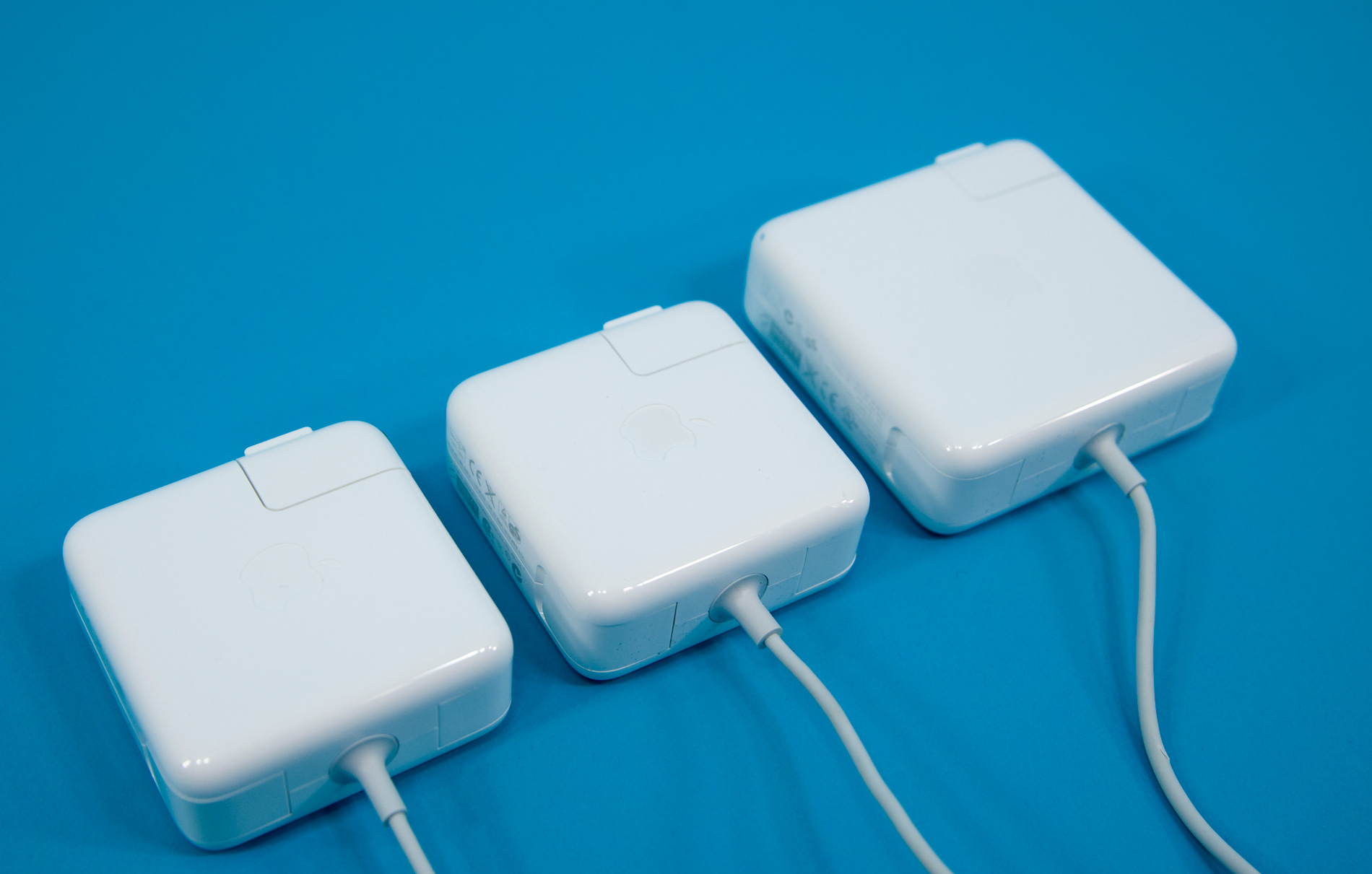
And therein is the snag for both Nvidia and power users. Nvidia’s failure is that its $800 GeForce GTX 480M is neither more efficient nor more powerful than the $130 desktop GeForce GTS 450 at the resolutions supported by most notebook panels. Power users, on the other hand, must face the fact that Intel’s Core i7-980X draws big power no matter where it’s installed, resulting in a notebook that’s 2.8” thick and reaches 43 db at full load (one meter), realistically sounds closer to 50db when you’re sitting in front of it, uses a power brick that’s larger than a red facing brick, and has a combined weight greater than that of most bowling balls.
But the woes of power users don’t end at portability and noise. Those hoping to combine the X7200’s CPU and twin graphics processors in some super-duty GPU-assisted encoding tasks should consider themselves lucky if their programs can’t take full-advantage of the GeForce GTX 480M’s capabilities. A few seconds into our attempt to run eleven threads of Prime95 and one thread of FurMark across both graphics processors simultaneously pushed at-the-wall power consumption beyond 400 W, activating the power adapter’s overload protection circuit. Performance slowed to a crawl as the system went into battery-powered mode.
The good news that followed this test was that no combination of real-world programs and games was able to create the same phenomena, with Crysis and Prime95 pulling a maximum of 372 W from the wall (below the 400+ W required to trip the automatically-resetting circuit breaker).
There is no perfect way to compare desktop and notebook platform energy, since the power supplies can never be the same. This is particularly true with the 80 PLUS Gold-rated OCZ Z1000M power supply our desktop used, which exhibits increased efficiency as load is increased. The MALIBAL Nine X7200 uses a fanless power supply that gets somewhat warm at high loads, which should result in increased efficiency as load is decreased. It appears the desktop platform’s two low-cost GeForce GTS 450 graphics cards use about the same amount of power as the notebook’s dual high-end GTX 480M modules.
And therein is the snag for both Nvidia and power users. Nvidia’s failure is that its $800 GeForce GTX 480M is neither more efficient nor more powerful than the $130 desktop GeForce GTS 450 at the resolutions supported by most notebook panels. Power users, on the other hand, must face the fact that Intel’s Core i7-980X draws big power no matter where it’s installed, resulting in a notebook that’s 2.8” thick and reaches 43 db at full load (one meter), realistically sounds closer to 50db when you’re sitting in front of it, uses a power brick that’s larger than a red facing brick, and has a combined weight greater than that of most bowling balls.
But the woes of power users don’t end at portability and noise. Those hoping to combine the X7200’s CPU and twin graphics processors in some super-duty GPU-assisted encoding tasks should consider themselves lucky if their programs can’t take full-advantage of the GeForce GTX 480M’s capabilities. A few seconds into our attempt to run eleven threads of Prime95 and one thread of FurMark across both graphics processors simultaneously pushed at-the-wall power consumption beyond 400 W, activating the power adapter’s overload protection circuit. Performance slowed to a crawl as the system went into battery-powered mode.
The good news that followed this test was that no combination of real-world programs and games was able to create the same phenomena, with Crysis and Prime95 pulling a maximum of 372 W from the wall (below the 400+ W required to trip the automatically-resetting circuit breaker).
In spite of its weight and occasional noise, the MALIBAL Nine X7200 is still far more portable than any combination of desktop PC, monitor, keyboard, and mouse. This is especially true if you consider that an Uninteruptable Power Supply would need to be added to the desktop PC’s component list in order to make it useful away from any power outlet.

There are a few things you can do with the X7200’s battery, such as checking email, surfing the Web, or viewing a presentation while you’re on that trip between the home office and corporate office. We’ve heard the argument that nobody buys a high-end desktop replacement notebook to check email, but we have to wonder who would be willing to tell their boss “no sir, I did not close that multimillion-dollar deal because my system is too good for such petty tasks.” Bottom line: notebooks do notebook things--no matter why you originally purchased them.
MALIBAL wants to be your supplier of the X7200, making a strong argument for its brand, in this case, with three years of labor coverage and US-based 24/7 tech support.
There are a few things you can do with the X7200’s battery, such as checking email, surfing the Web, or viewing a presentation while you’re on that trip between the home office and corporate office. We’ve heard the argument that nobody buys a high-end desktop replacement notebook to check email, but we have to wonder who would be willing to tell their boss “no sir, I did not close that multimillion-dollar deal because my system is too good for such petty tasks.” Bottom line: notebooks do notebook things--no matter why you originally purchased them.
Conclusion
Any gamer looking for the performance of a high-end desktop processor in a notebook doesn’t have to look far to see that the X7200 is their best choice, since its available dual GeForce GTX 480M graphics cards lay waste to any other portable solution. The words hot, heavy, and noisy only apply if you have something to compare against, yet the X7200 is incomparable to other notebooks. With its combination of top-end desktop CPU and top-end mobile graphics, the X7200 is the most powerful notebook money can buy.MALIBAL wants to be your supplier of the X7200, making a strong argument for its brand, in this case, with three years of labor coverage and US-based 24/7 tech support.
Read more...